Insights for CEOs, C-suite and emerging leaders on culture, AI and disciplined execution in 2026
As we step into 2026, leaders are navigating a world of relentless technological acceleration, rising customer expectations and increasing pressure to build resilient, high-performance cultures. A new year is not just a moment to reset; it is a mandate to lead differently if we are serious about shaping the future we desire tomorrow.
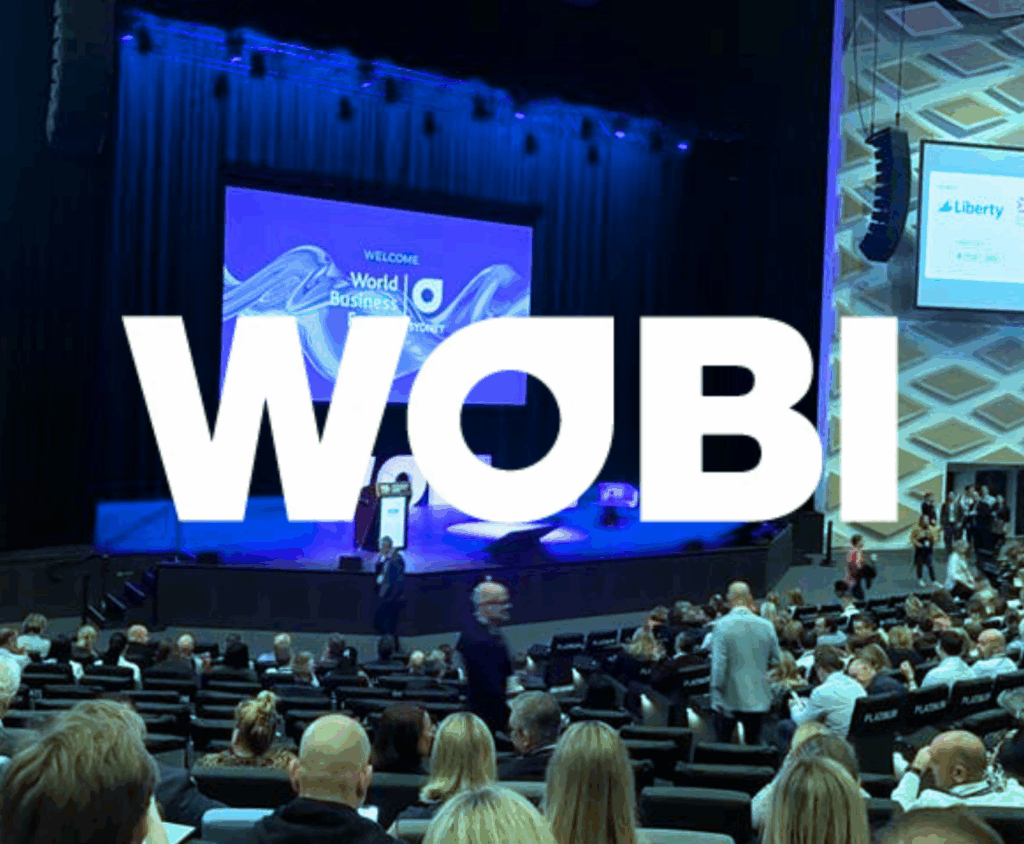
Drawing on insights from last year’s WOBI 2025 conference, where global thinkers, leadership experts and industry trailblazers converged, we have distilled six critical leadership insights for CEOs, C-suite leaders and emerging middle managers, who sit at the heart of organisational performance and culture. These insights form a practical blueprint for leading boldly, challenging intelligently, innovating courageously and humanising relentlessly in the year ahead.
Through the lenses of internationally renowned leadership experts Amy Edmondson, Renée Gosline, Steve Vamos, Peter Wilton, Tom McNeill and Dr Catherine Ball, we have synthesised the insights for leaders shaping 2026.

1. Psychological safety is the engine of high-quality decisions
Inspired by Amy Edmondson, the world’s leading authority on Psychological Safety and a professor at Harvard Business School.
In an environment defined by unpredictability, AI disruption, market volatility and shifting customer expectations, leaders must reduce fear as fast as the environment creates it. Psychological safety is not a “nice to have”; it is a foundational leadership behaviour that determines the quality of strategy, execution, innovation and team performance.
The organisations that outperform will be those where productive conflict is normalised, dissent is welcomed, experimentation is valued and middle managers feel safe to surface issues early.
Leaders need to:
- Replace “Any questions?” with “Who sees this differently?”
- Normalise intelligent failure as essential learning
- Reward transparency, not perfection
- Create regular rhythms where issues surface before they escalate
Model curiosity, reward openness and treat silence as risk. High-quality conversations drive high-quality decisions.

2. AI will transform customer experience, but human insight will create meaning
Inspired by Renée Gosline, award-winning Research Scientist and Senior Lecturer at the MIT Sloan School of Management.
The risk is twofold: under-using AI creates inefficiency; over-automating erodes trust and emotional connection. AI should be used as a strategic amplifier, freeing leaders to be more human, not less.
The future of customer experience will be built on trust, empathy and the intelligent integration of technology.
Leaders must:
- Use AI to eliminate cognitive load and improve accuracy
- Design high-empathy moments where humans remain essential
- Empower middle managers to interpret insight, not just process data
- Balance personalisation with boundaries that protect emotional safety
Efficiency matters, but empathy differentiates.

3. Execution is the discipline that shapes the future
Inspired by Steve Vamos, renowned global technology executive and former CEO of Xero, Microsoft Australia and Apple Asia Pacific.
Execution is not an operational practice; it’s a cultural imperative. Misalignment, blurred priorities and leadership avoidance erode results faster than flawed strategy ever will. Execution is where leadership discipline becomes visible.
Leaders should:
- Establish the “critical few” priorities
- Operate as a unified executive system, not siloed functions
- Align middle management so strategy becomes behaviour
- Use real-time feedback to continually course-correct
Discipline today builds the future we want tomorrow.

4. Sustaining and reframing excellence both matter, but they are not the same
Inspired by Peter Wilton, Marketing Professor at UC Berkeley and a leading expert in strategy, digital transformation, and customer experience.
Building a high-performance culture requires two mindsets: sustaining excellence (efficiency, consistency, predictability) and reframing excellence (creativity, experimentation, tolerance for ambiguity). One fuels the present. The other shapes the future.
Leaders must:
- Build a balanced transformation portfolio
- Resource reframing differently: psychologically, structurally and strategically
- Use AI for both prediction and experimentation
- Support middle managers to safely challenge legacy models
Ambidexterity is no longer optional; it’s an essential leadership skillset that will drive high-performance and build a future-ready culture.

5. Simplicity, speed and radical deletion unlock performance
Inspired by Jon McNeill, CEO of DVx Ventures and visionary former President of Tesla Motors.
Complexity is often self-inflicted. Layers build, processes harden and speed disappears. Breakthrough performance comes not from doing more, but from removing what no longer serves.
Leaders should:
- Map processes and delete what customers would never pay for
- Bring teams to the frontline to see reality
- Build rapid feedback loops instead of prolonged analysis
- Automate only after simplification
- Encourage middle managers to challenge steps, not just execute them
Radical simplicity is the operating system of speed.

6. Ethics, humanity and creativity in the age of AI
Inspired by Dr Catherine Ball, global business pioneer, Scientific Futurist, and Environmental Scientist.
AI presents extraordinary opportunity and profound responsibility. Technology must amplify human judgment, not replace it. The real leadership test is not “Can we?” but “Should we?”.
Leaders should:
- Embed ethics into every stage of AI adoption
- Value creativity and human skill alongside technology
- Prioritise transparency and accountability
- Encourage cross-disciplinary thinking to anticipate unintended consequences
- Champion trust and stewardship
The true measure of leadership in the age of AI is not technical prowess alone, but the courage to place human values at the centre of every decision.
The leadership insights defining 2026
WOBI’s speakers reaffirmed that leadership today is about shaping the future we desire tomorrow through clarity, courage, conviction and humanity.
To do this, leaders must:
- Build psychological safety
- Integrate AI with human intelligence
- Execute with discipline and unity
- Balance sustaining excellence with reframing innovation
- Simplify relentlessly
- Champion ethical, responsible innovation
Middle management will carry this transformation, but it begins with the C-suite modelling the behaviours that make the future possible.
This is leadership for the world we want to create and the legacy we want to leave for the next generation.